Wood rot is more than just a cosmetic issue—it’s a chemical transformation that can quietly weaken the structural integrity of your home. Homeowners, property managers, and DIY renovators in Kansas City frequently face this problem, especially due to the region’s humidity, rain, and temperature fluctuations. So, is wood rotting a chemical change? Absolutely. Here’s why it matters and how Pileggi Painting can help you address it before it worsens.
Table of Contents
Understanding Chemical vs. Physical Changes
How to Tell the Difference
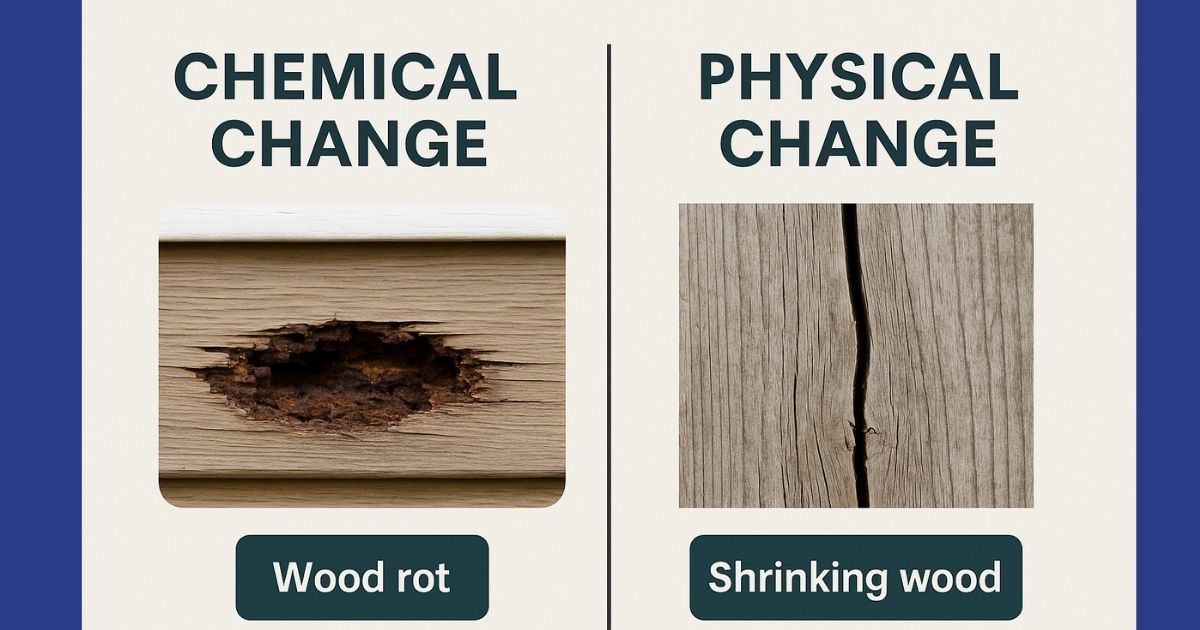
A chemical change alters a material’s internal structure, while a physical change only affects its appearance. Think of rusting metal or burnt toast—that’s a chemical change. In contrast, cracking or shrinking wood is a physical change.
Why Wood Rot Is Irreversible
Wood rot occurs when fungi feed on the cellulose and lignin in wood, breaking it down into new compounds. This irreversible process changes the wood’s chemical composition permanently, much like rust or decay in organic materials.
Chemical Change Definition – Britannica
The Science Behind Wood Rot
Fungi, Moisture, and the Breakdown of Wood Fibers
Wood rot thrives where moisture, oxygen, and fungi converge. Fungi consume the wood’s structural fibers, causing softness, odor, and discoloration. Kansas City’s weather—with its rain, snow, and humidity—creates ideal conditions for this chemical breakdown.
EPA Moisture Control Guidelines
Why Wood Rot Weakens Structures Over Time
As rot progresses, it hollows out the wood’s internal support. Decks, window sills, and siding lose their integrity, becoming safety hazards and eyesores. Once rot starts, it spreads rapidly without professional intervention.
Common Areas at Risk in Kansas City Homes
Decks, Fascia Boards, Window Trim, and Siding
Exterior wood surfaces are especially vulnerable. Fascia boards, trim, decks, and siding—often unsealed or poorly maintained—frequently harbor hidden rot. Watch for soft wood, bubbling paint, or visible mold.
How Pileggi Painting Can Help
Expert Inspection, Repair, and Repainting Services
Pileggi Painting specializes in:
-
Wood rot inspection: We identify problem areas before they spread.
-
Repair and replacement: Rotten wood is replaced or patched using durable materials.
-
Weatherproof painting: High-performance primers and paints resist future moisture damage.
-
Preventative maintenance: We seal joints and edges to prevent new rot.
Explore our wood rot repair services
FAQs About Wood Rot and Repairs
Can I paint over wood rot?
No. Painting over rot only masks the problem. The rot continues underneath and may spread. Always repair or replace the affected area first.
How do I prevent it in the future?
Keep exterior wood dry and well-sealed. Clean gutters, repair leaks, and repaint regularly using moisture-resistant products.
Is all moldy wood considered rotten?
Not necessarily. Mold is a surface issue and can sometimes be cleaned. However, if the wood is soft or crumbly, it has likely rotted.
Conclusion
Recognizing wood rot as a chemical change underscores its seriousness. It’s not something you can just scrape off or paint over—once the wood structure changes, it’s compromised. That’s why it’s vital to act fast.
If you suspect wood rot on your deck, siding, or trim, contact Pileggi Painting for a comprehensive inspection. We’re Kansas City’s trusted experts in wood rot repair and exterior painting, committed to protecting your home’s beauty and value.
Schedule your free quote today or view our completed projects to see the difference professional care makes.